What Are the Five Elements?
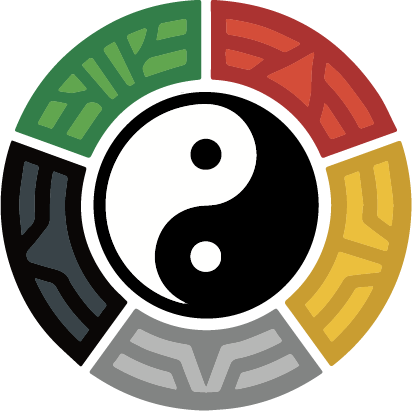
After Yin and Yang, the next basic idea in Birth Code is the Five Elements. Yin and Yang explain direction, change, and relationship. The Five Elements explain the kinds of energy involved in that movement.
Together, they form one of the main foundations of Birth Code.
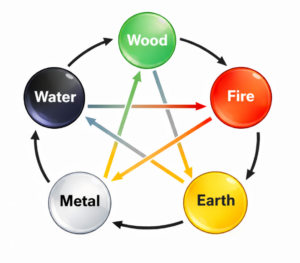
The Five Elements are:
- Wood
- Fire
- Earth
- Metal
- Water
At first, these names may sound like physical substances. However, in Birth Code, they work as symbolic categories. They describe patterns in nature and the way energy tends to move and express itself.
What the Five Elements Mean
Each element describes a different quality of energy.
In simple terms:
- Wood relates to growth and outward development
- Fire relates to heat, rising force, and expansion
- Earth relates to support, balance, and stability
- Metal relates to structure, order, and refinement
- Water relates to flow, depth, and adaptability
These are general tendencies, not hard rules. In other words, the Five Elements help you notice broad patterns rather than fixed definitions.
The Five Elements Are Not Literal Materials
It is important not to read the names too literally. Wood does not mean actual timber, and Fire does not mean a real flame. Instead, each name points to a recognizable quality in nature.
For example, Wood suggests the image of growth. It pushes upward and outward, much like a plant. Water suggests movement that flows, adjusts, and finds its path around obstacles.
Because of that, the names are useful. They turn abstract ideas into images that are easier to understand and remember.
The Basic Qualities of the Five Elements
Each element has its own direction and style of movement.
Wood tends to grow upward and outward. It suggests development, reaching, and expansion.
Fire tends to rise and spread. It suggests heat, visibility, and strong outward expression.
Earth tends to gather, hold, and stabilize. It suggests support, grounding, and balance.
Metal tends to contract, organize, and define. It suggests structure, clarity, and refinement.
Water tends to move downward and flow. It suggests depth, adaptability, and continuation.
These movement patterns matter because they help explain how the elements behave inside a chart. Later on, they also make it easier to understand why some elements support each other while others regulate each other.
How the Five Elements Work Together
The Five Elements do not stand alone. Instead, they are always understood through relationship.
Two of the most important patterns are the generating cycle and the controlling cycle.
The generating cycle shows how one element supports or produces another.
The controlling cycle shows how one element regulates or restrains another.
At the beginner level, the main point is simple: the meaning of an element becomes clearer when you see how it relates to the others. So rather than treating Wood, Fire, Earth, Metal, and Water as isolated ideas, it is better to see them as part of one connected system.
Yin and Yang Within Each Element
Each of the Five Elements can also appear in Yin and Yang forms. This means the same element can express itself in more than one way.
For example, Wood may appear in a stronger, more direct form, or in a softer, more flexible form. Both are still Wood, but the style of expression is different.
This idea adds another layer to the system. It also becomes more important when you begin studying the Heavenly Stems and reading charts in more detail.
For now, the key point is enough: the Five Elements describe five basic kinds of energy, and each one can appear in different forms.
The next step is to look at Wood, Fire, Earth, Metal, and Water one by one.